


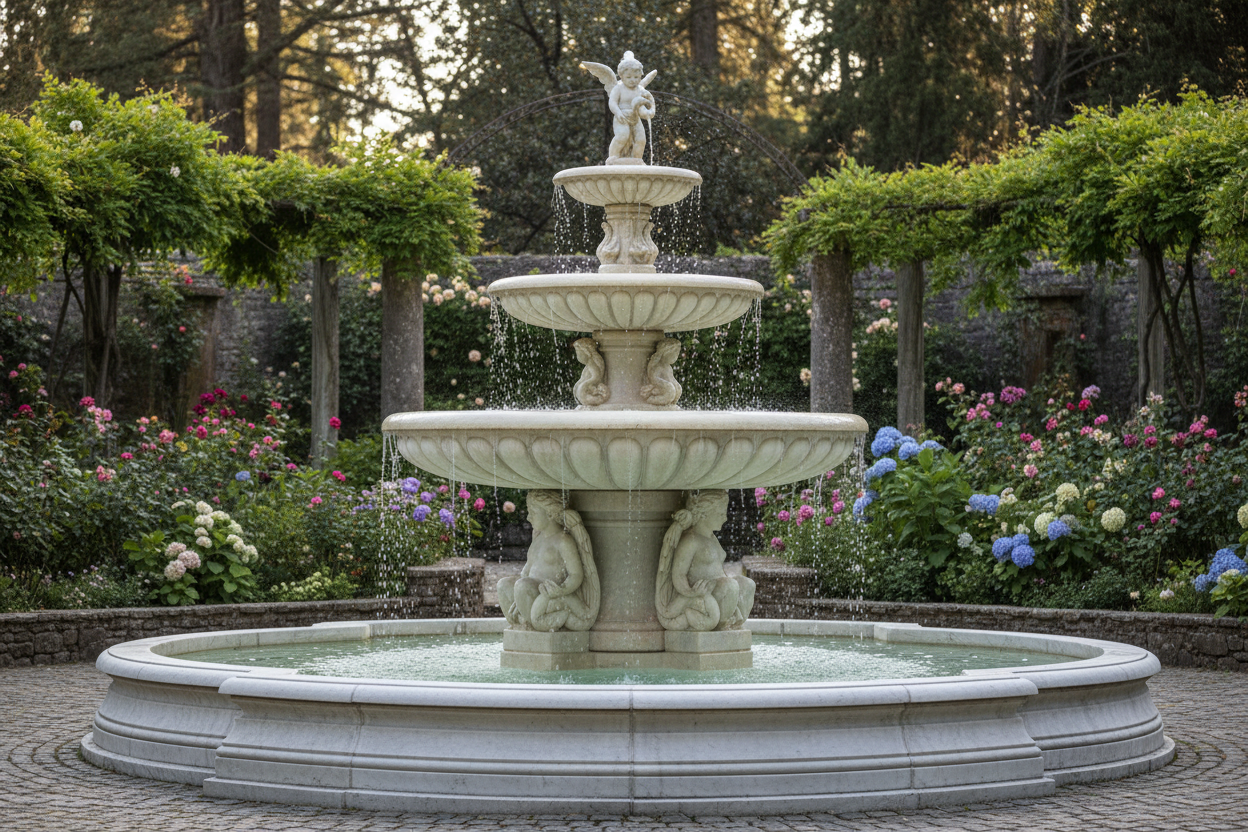
Few materials bring the timeless elegance of natural marble to a garden. From grand tiered water features gracing Italian villas to a simple wall-mounted fountain on an Australian patio, marble has been the material of choice for water features for centuries — and for good reason. Its fine grain carves beautifully into intricate detail, its natural veining means no two pieces are ever quite the same, and a well-maintained marble fountain can remain a centrepiece for generations.
But "marble" isn't one single material. There are dozens of varieties, each with its own colour, veining, hardness, and suitability for outdoor use. If you're choosing a marble fountain for your garden — or simply want to understand what makes one marble different from another — here's your guide.
Why marble remains the classic choice for fountains
Natural marble has been used in fountains since Roman and Renaissance times, and some of those original installations are still standing and functioning centuries later. It offers:
· Carving detail — its fine, even grain allows sculptors to create intricate scrollwork, tiers, and figures that other stones can't replicate as cleanly
· Natural beauty — subtle veining and colour variation mean every fountain has genuine one-of-a-kind character
· Longevity — with proper sealing and placement, marble fountains can last 40 to 100+ years
· Timeless aesthetic — marble suits both classical European-style gardens and contemporary minimalist landscaping equally well
The trade-off is that marble is softer and more porous than stones like granite, so the right variety and finish matter, especially in an outdoor Australian climate with harsh UV and variable rainfall.
White marbles — the traditional fountain favourites
White marble is what most people picture when they think of a garden fountain, and there's a good reason it dominates the category: it photographs beautifully, suits almost any garden style, and shows off carved detail exceptionally well.
Carrara Marble (Italy)
The gold standard of fountain marble. Bright white with soft grey veining, fine-grained enough for detailed carving, and steeped in history — many surviving Renaissance fountains were carved from Carrara. Moderate porosity means it should be properly sealed for long-term outdoor use.
Calacatta Marble (Italy)
A more dramatic, luxurious cousin of Carrara, with bold gold-and-grey veining set against a bright white background. Lower availability makes it a more exclusive choice, and its higher density gives it slightly better water resistance than standard Carrara.
Statuario Marble (Italy)
Prized for its near-pure white colour and minimal veining, Statuario has a harder composition than Carrara and is often reserved for premium, high-end fountain commissions.
Thassos Marble (Greece)
A snow-white marble with no veining at all, giving a clean, uniform look. It has a notably low absorption rate, making it naturally more water-resistant than most white marbles — a genuine advantage for anything that will see constant water flow.
Mugla White Marble (Turkey)
A pure white stone with light grey veins, popular for outdoor sculpture and fountains as a slightly more accessible alternative to Italian marble.
Beige and neutral marbles — warmth without losing elegance
For gardens with a warmer, more Mediterranean or earthy palette, beige and cream marbles offer the same carving quality as white marble with tones that blend naturally into greenery and sandstone landscaping.
Egyptian Beige / Galala Cream Marble (Egypt)
Prized in the fountain trade for being harder than average marble with a high gloss finish and very small colour variation between pieces — useful when you need consistency across a production run.
Crema Marfil Marble (Spain)
A warm beige stone that is noticeably more resistant to wear than the white marbles, making it a smart pick for busier outdoor installations.
Bursa Beige Marble (Turkey)
Soft, light beige with subtle veining — a versatile, natural-looking option for patios, walkways, and garden fountains alike.
Perlato Royal / Botticino / Bianco Perlino (Italy)
Classical Italian cream and light-grey marbles with arabesque veining, traditionally used for fountains, mantels, and formal garden features.
If you want your fountain to be a genuine focal point rather than a background feature, colour marbles deliver drama that white stone simply can't.
Rojo Alicante and Sunset Red
Rich red-toned marbles with white veining, used in high-end installations where a fountain needs to command attention.
Rosetta Marble
A light salmon marble that's notably harder and higher-density than average — a good choice if you want colour without sacrificing longevity.
New Zealand Green and Tinos Green (Greece)
Pastel and deep green marbles respectively, both popular for exterior statuary and fountains, with Tinos in particular valued for its natural moisture resistance.
Rainforest Marble (India)
A greenish-brown marble with unique veining that resembles a forest canopy — tougher than typical white marble and well suited to landscaped garden settings.
Emperador Dark / Black Marble
Deep brown-black tones for a modern, dramatic aesthetic — increasingly popular in contemporary courtyard and architectural fountain designs.
Marble's close relatives: travertine, granite, and onyx
A few other natural stones are commonly grouped with marble fountains, either as alternatives or as complementary materials in mixed designs:
· Travertine is technically a limestone rather than a true marble, but it's marketed alongside it in most fountain ranges. Its earthy beige tones and famously rough surface texture give it excellent outdoor durability — the same material the Romans used in fountains that are still standing today.
· Granite is far harder and more weather-resistant than marble, making it the better option for fountains that will face heavy sun, frost, or constant water flow with minimal maintenance.
· Onyx is translucent and is typically used as an accent element — a lit centrepiece or inlay — rather than the entire fountain structure, since it's softer again than marble.
Choosing the right marble for your climate and setting
A few practical considerations before you buy:
1. Veining matters more than colour for durability. Marble with fewer, thinner veins holds up better outdoors, since heavily veined slabs are more prone to cracking along those natural seam lines under constant water pressure.
2. Sheltered positions extend lifespan. Marble performs best out of direct, harsh sun and away from prolonged frost exposure. A covered courtyard or partially shaded garden bed will always outlast a fully exposed, north-facing position.
3. Sealing is non-negotiable. Because marble is porous, regular sealing protects against staining from mineral-rich water and general weathering — this is standard maintenance, not a sign of a lower-quality product.
4. Denser marbles cost more but need less upkeep. Statuario, Rosetta, and Tinos Green are all denser than standard Carrara, trading a higher price point for noticeably better long-term water resistance.
5. Match the stone to the design. Fine, low-vein white marbles like Thassos are ideal for clean, minimalist tiered fountains, while richly veined Calacatta or colour marbles like Rojo Alicante suit ornate, statement-piece designs.
There is no single "best" marble for a fountain — the right choice depends on your climate, how exposed the installation will be, and the aesthetic you're after. White marbles like Carrara and Thassos remain the classic, versatile choice for most Australian gardens; beige tones like Crema Marfil offer a warmer, lower-maintenance alternative; and colour marbles let a fountain become the true centrepiece of a landscaped space.
Whichever variety you choose, a well-sealed, thoughtfully placed marble fountain isn't just a decorative purchase — it's a piece that can genuinely become part of your garden's story for decades to come.
Sources: Marble Art Fountain, CN Statue, Fine's Gallery, Greek Marbles, Liva Marble, First Statue, Marble Seven, ShushinArt, Fountainland Australia, Marbleism, US Marble


